
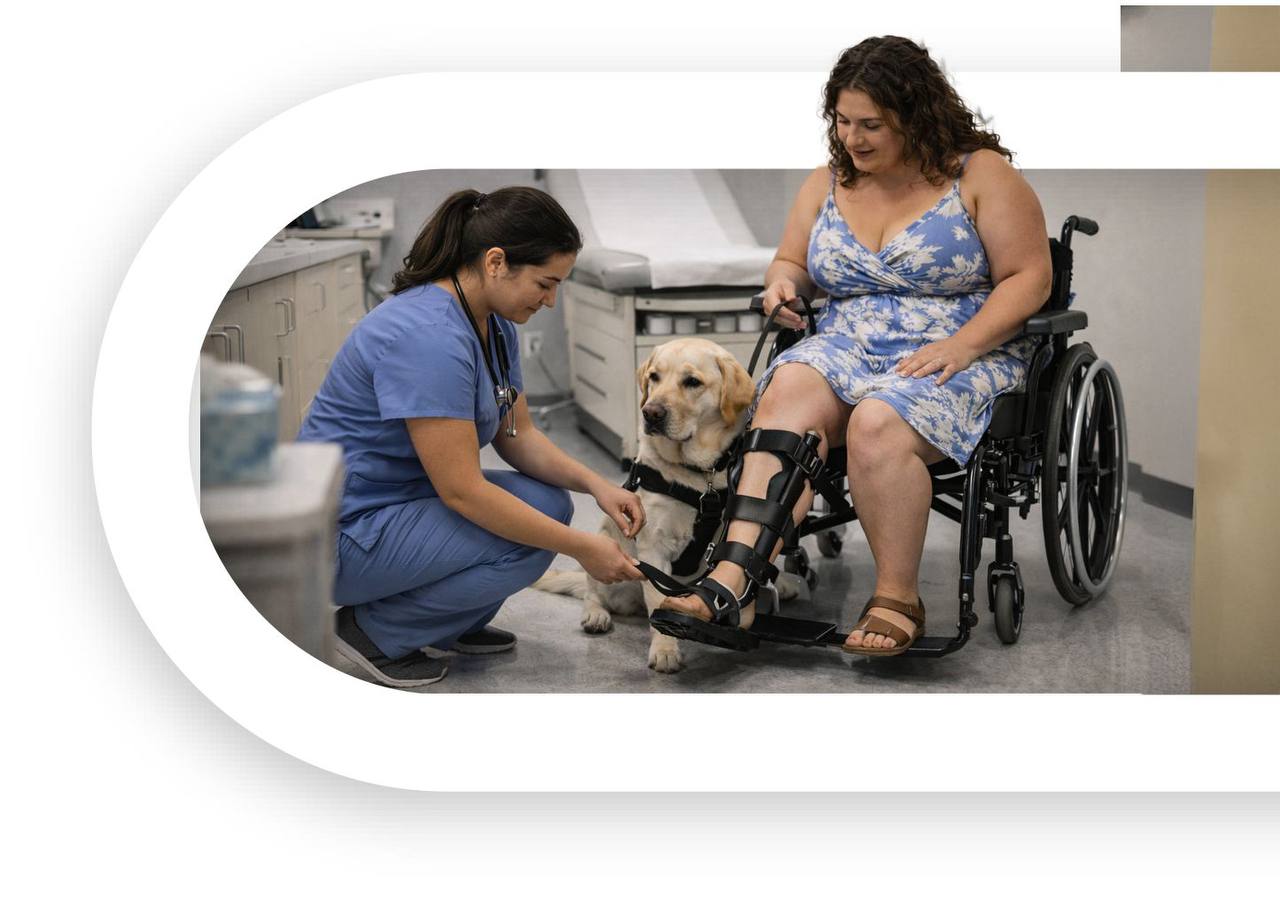

Deep pressure stimulation to calm a handler during a panic attack
In general terms, emotional support dogs are not service dogs. Service dogs perform trained tasks that mitigate a disability.
 Test label
Test subtitle


Service Dog Standards represents community-defined training and behavior standards for handlers and their Service Dogs. Accepting these standards is a way of voluntarily holding yourself and your animal to a higher standard which goes above and beyond the law.
Under the law the only requirement for a Service Dog is that they be specifically trained to perform tasks or work for a disabled individual who would otherwise have difficulty accomplishing those tasks on their own due to their disability.
This guide is designed to not only help with expectations and requirements for Service Dog trainers and handlers but to also serve as a resource that covers commonly overlooked pitfalls and issues that handlers experience.
In general terms, emotional support dogs are not service dogs. Service dogs perform trained tasks that mitigate a disability.

When you encounter a service dog, it should be calm and attentive to their handler.
A hallmark of a service dog is staying focused and not causing a disturbance in shared spaces.
Service dogs should be under control in public access areas and respond to handler cues.

Professional service dog teams show respect for safety, space, and etiquette in community settings.
A service dog should not bark excessively, jump on people, or wander from the handler. Public reliability is one of the clearest indicators of training maturity.
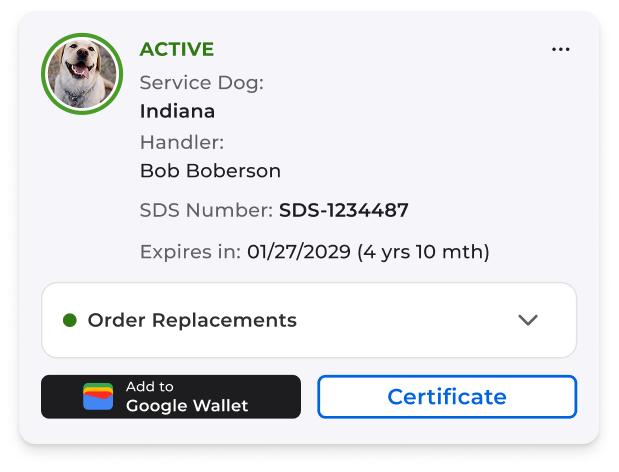
At Service Dog Standards, we are passionate about empowering individuals with disabilities and fostering greater understanding and inclusion for service dog teams. We offer educational resources on training, tasks, and public access rights.

Service Dog Standards represents community-defined training and behavior standards for handlers and their Service Dogs. Accepting these standards is a way of voluntarily holding yourself and your animal to a higher standard which goes above and beyond the law.
Under the law the only requirement for a Service Dog is that they be specifically trained to perform tasks or work for a disabled individual who would otherwise have difficulty accomplishing those tasks on their own due to their disability.
This guide is designed to not only help with expectations and requirements for Service Dog trainers and handlers but to also serve as a resource that covers commonly overlooked pitfalls and issues that handlers experience.
If you're a student with a service dog who meets our training and behavior standards, including Service Dog Standards as part of your canine partner's background information or training resume can be very helpful. Enrollment demonstrates your commitment to responsible ownership and needs to be renewed every four years to maintain its validity.
If you're a student with a service dog who meets our training and behavior standards, including Service Dog Standards as part of your canine partner's background information or training resume can be very helpful. Enrollment demonstrates your commitment to responsible ownership and needs to be renewed every four years to maintain its validity.
Service dog teams come in all shapes and sizes. Each partnership is built on the specific needs of the handler and the unique skillset of the dog.
The tasks a service dog performs will vary depending on the disability it is trained to assist with. However, one common thread unites all legitimate service dog teams:
Service Dogs need customized training to perform specific tasks that directly address the handler's limitations. These tasks go beyond what a well-trained pet can offer and are performed on cue, reliably and precisely.
A service dog's response to commands should be predictable, a testament to the extensive training behind it.
teess
test